
What we build
Six capabilities, built to solve problems that cost you money across your business. Every system is custom, engineered for production, and designed to run where your data already lives.
Computer Vision Systems
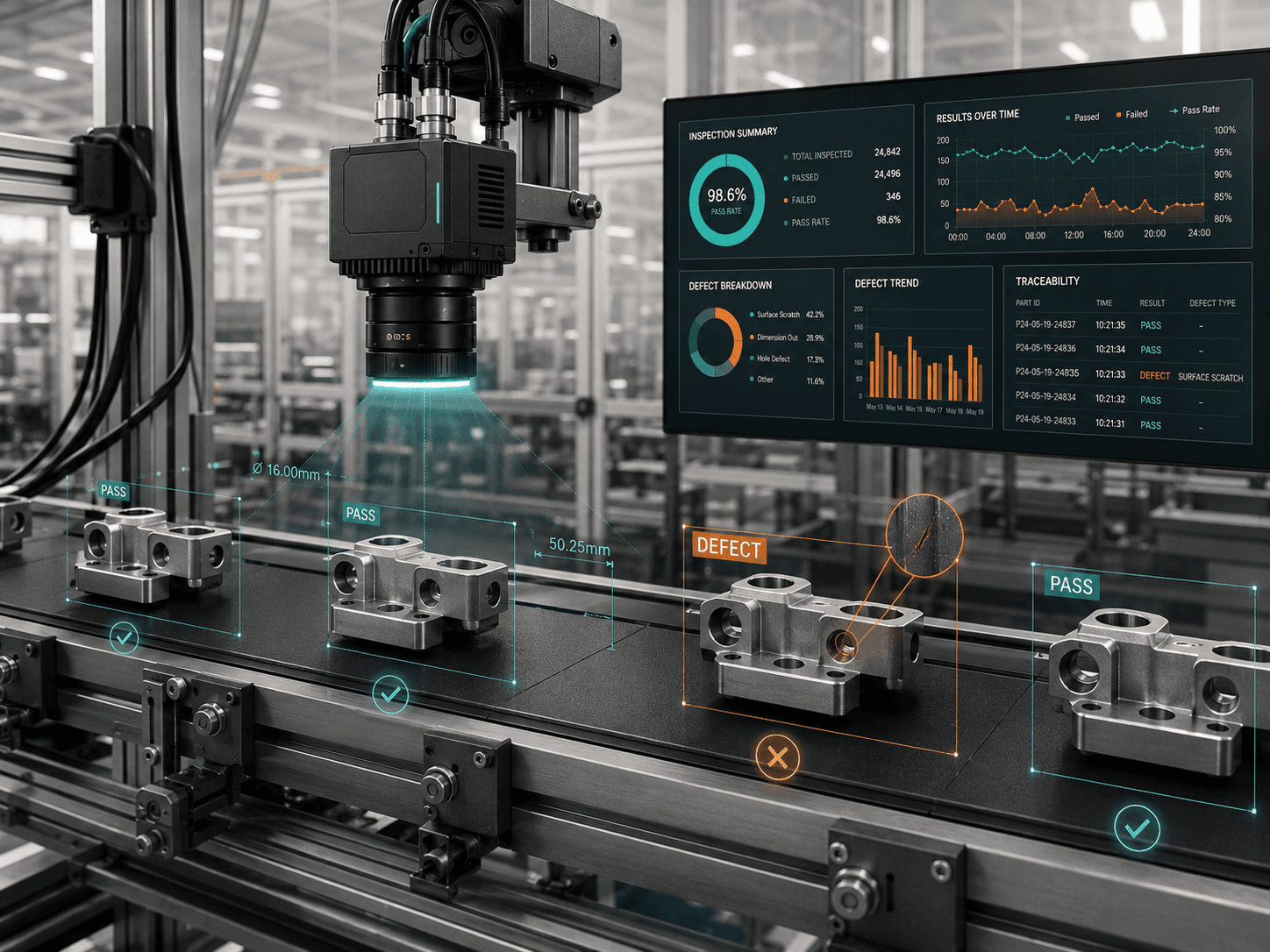
Cameras that watch your line and understand what they see. Instead of a person checking parts by eye, a trained model inspects every single one, at line speed, without tiring.
Manual inspection is slow, inconsistent between shifts, and catches defects late — often after value has already been added to a bad part. Scrap and rework cost you twice.
A system that flags defects the moment they appear, and keeps a record of every part it inspected. Over time that record tells you not just what failed, but where in the process it started going wrong.
- Surface and cosmetic defect detection
- Dimensional and assembly verification
- Part traceability and defect analytics
Predictive Maintenance
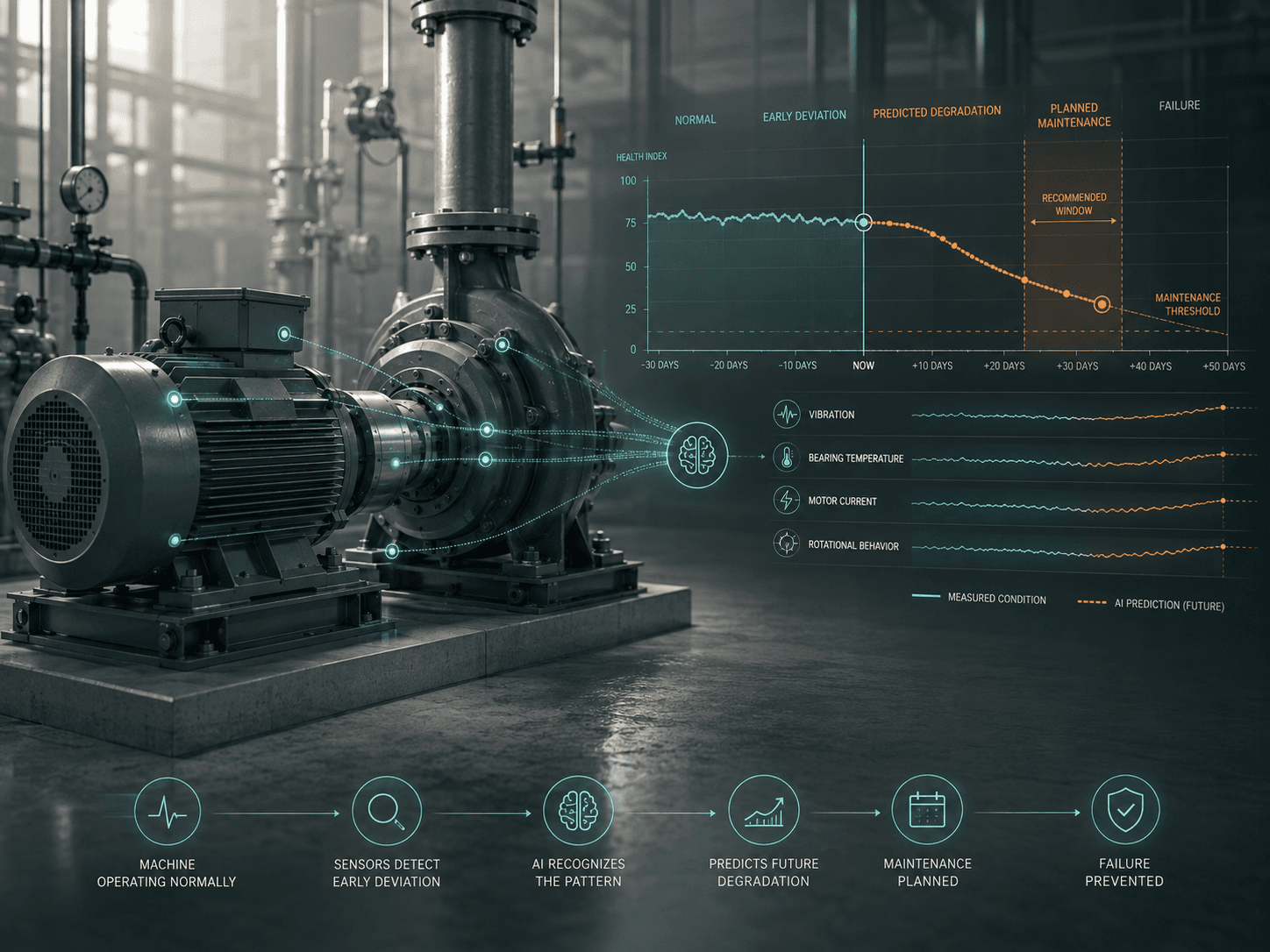
Models that learn the normal behaviour of your equipment from its sensor history, then warn you when a machine starts drifting toward failure.
Unplanned breakdowns stop production at the worst possible moment. Fixed-schedule servicing avoids some of that, but you end up replacing parts that still had life left and still get surprised by the ones that fail early.
Advance warning, so a breakdown becomes a planned repair during a scheduled window. You service what actually needs servicing, extend asset life, and stop paying for emergency downtime.
- Failure prediction and remaining-useful-life estimation
- Anomaly detection on sensor data
- Maintenance scheduling and prioritisation
Forecasting
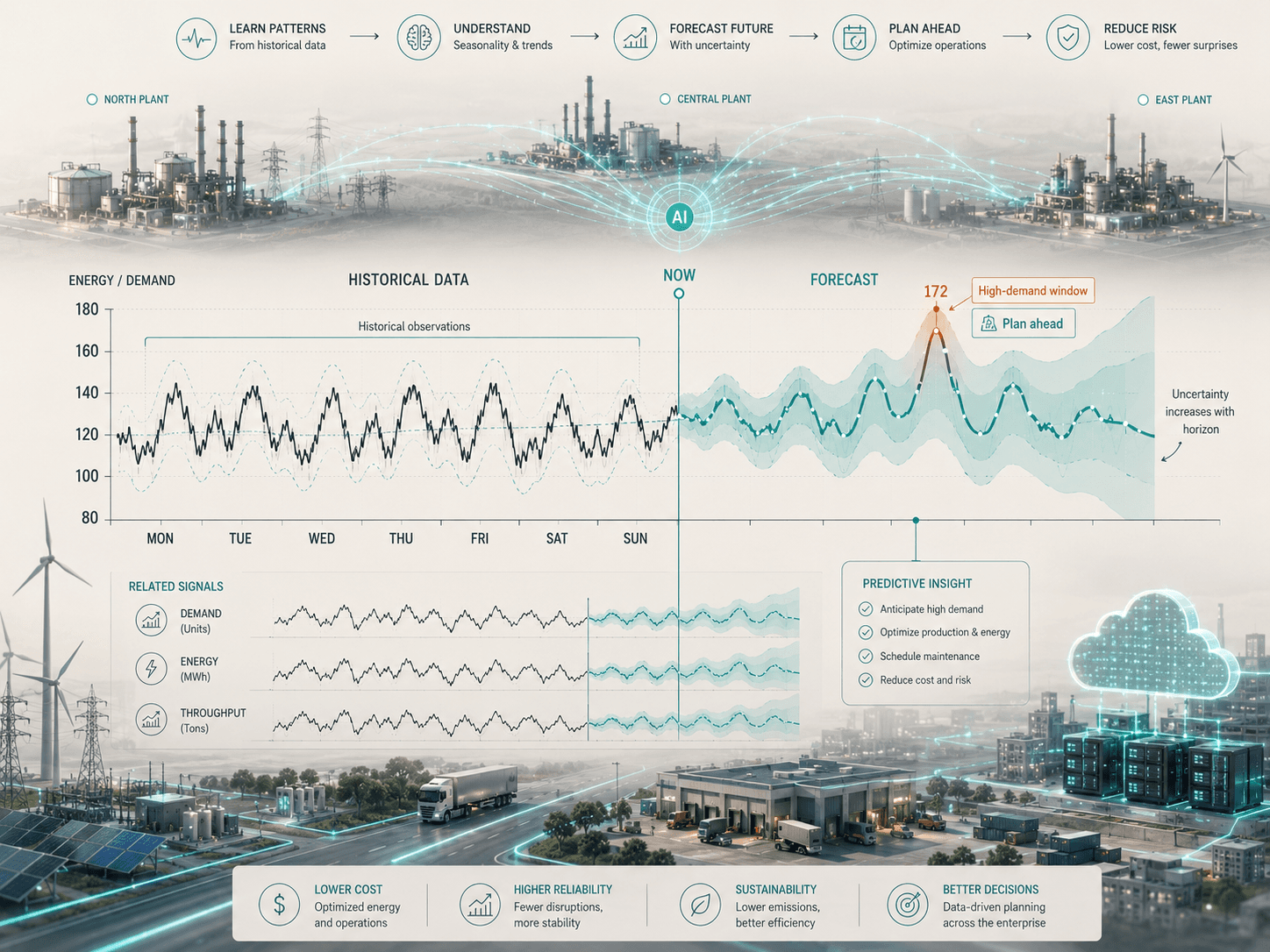
Models that learn from your own history — demand, load, energy, price — and produce forecasts at the horizon you plan on, with the uncertainty stated.
Plans built on spreadsheet averages miss the turns. You over-buy, over-staff, or run short, and nobody can say how wrong the number is likely to be.
Forecasts that refresh as new data arrives, with the range made explicit so you can decide how much buffer the plan actually needs instead of guessing.
- Demand and production load forecasting
- Energy consumption prediction
- Scenario and what-if analysis
RAG and Knowledge Systems
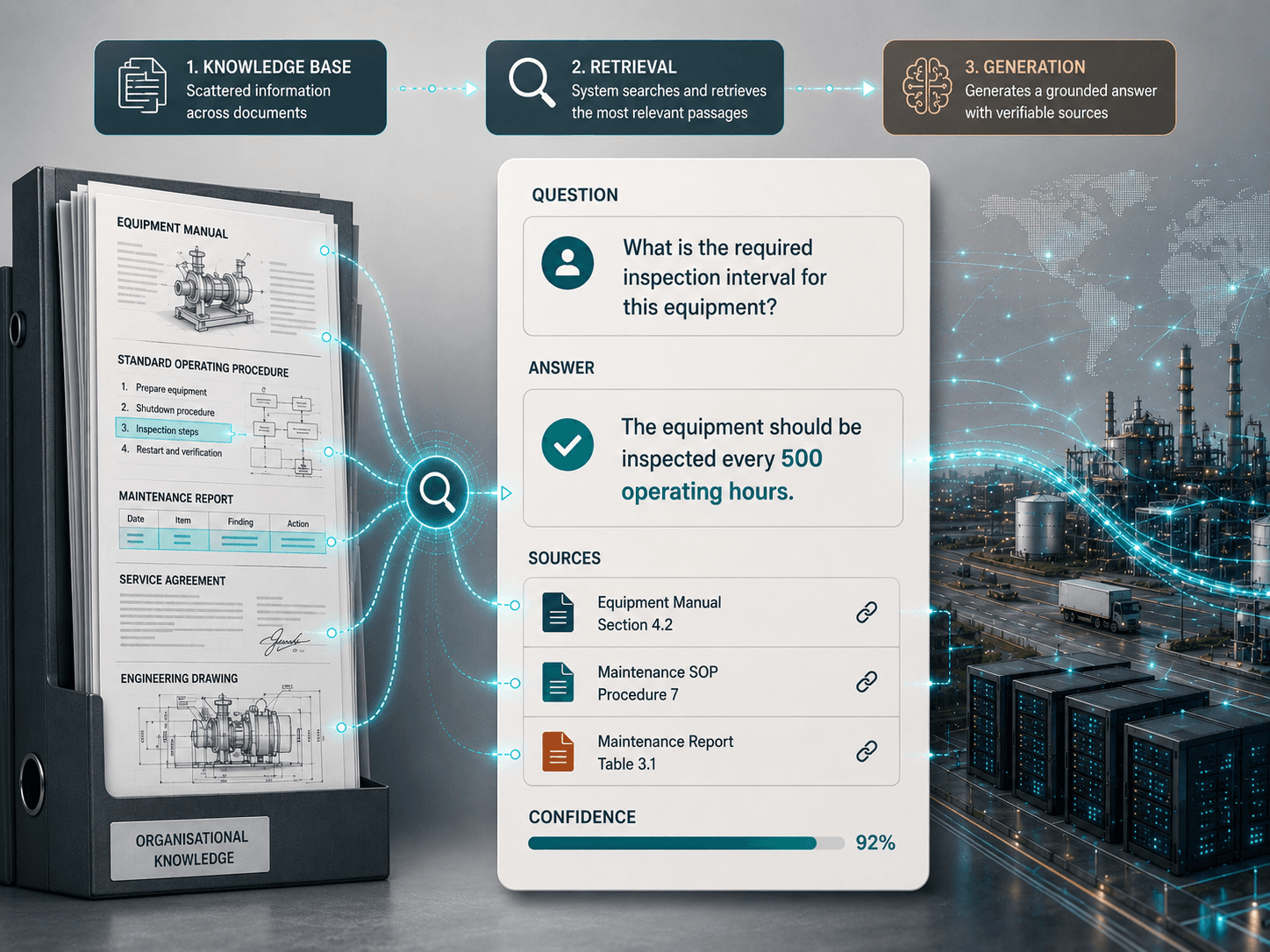
A retrieval system over your own documents — manuals, reports, drawings, tickets — that answers questions in plain language and points to the source it used.
The answer already exists somewhere in ten years of PDFs. Finding it needs someone who has been around long enough to know where to look, and that person is busy.
Answers you can verify, because every one cites the document and page it came from. It can run entirely on your infrastructure, so nothing leaves your network.
- Document search and question answering
- SOP, compliance and tender assistants
- Internal knowledge assistants on private data
AI Infrastructure and MLOps
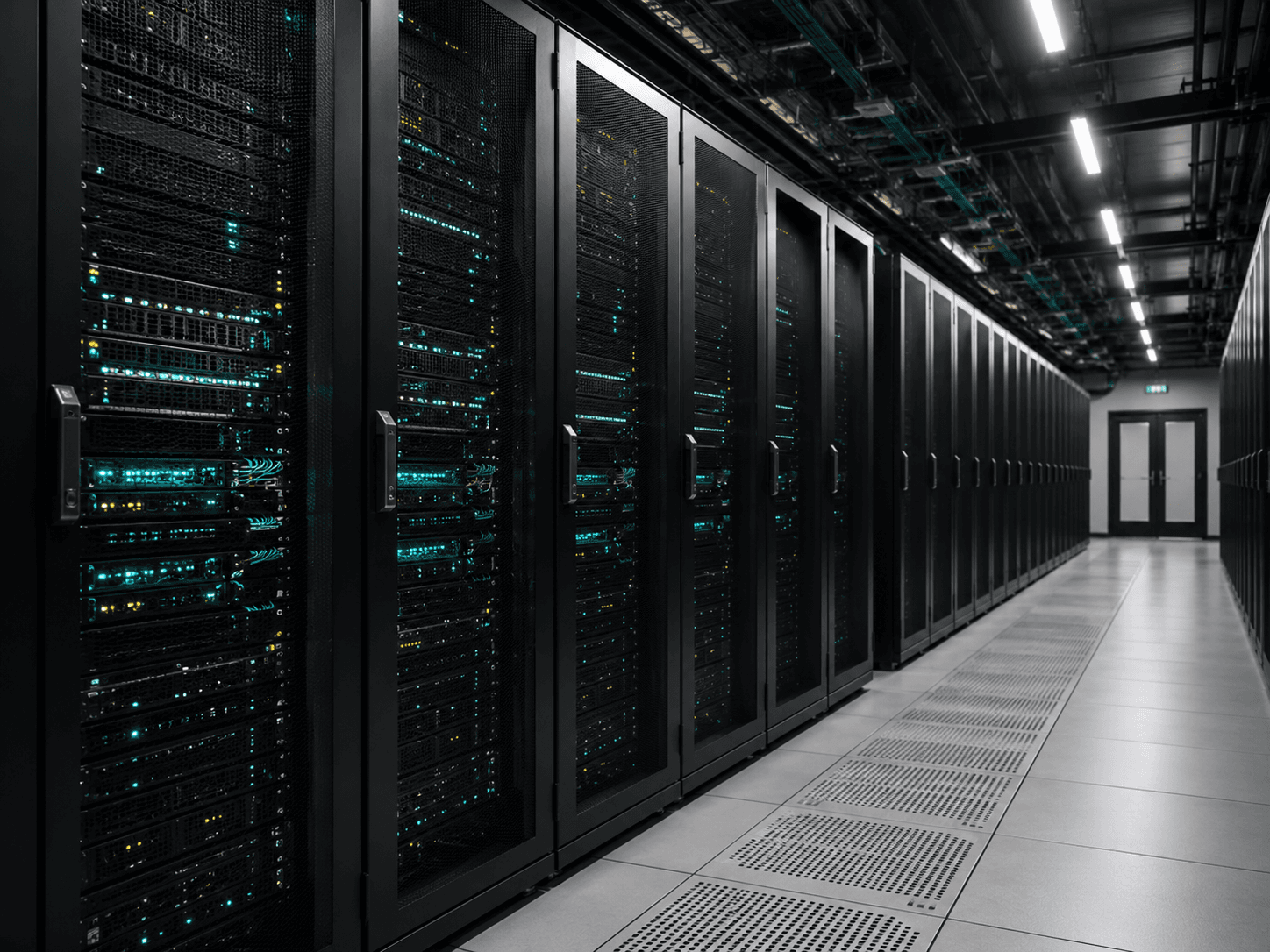
The engineering around a model — serving, monitoring, retraining, versioning — that keeps it working after the pilot is signed off.
Models that worked in a notebook quietly degrade in production. The data shifts, nobody notices, and the first thing you lose is the operators' trust in the system.
Pipelines, monitoring and drift alerts, on your premises or in your cloud. When accuracy moves, you find out before the plant does — and retraining is a routine, not a project.
- On-premise and edge deployment
- Drift monitoring and scheduled retraining
- Model versioning, rollback and audit trails
Custom Models and Optimisation
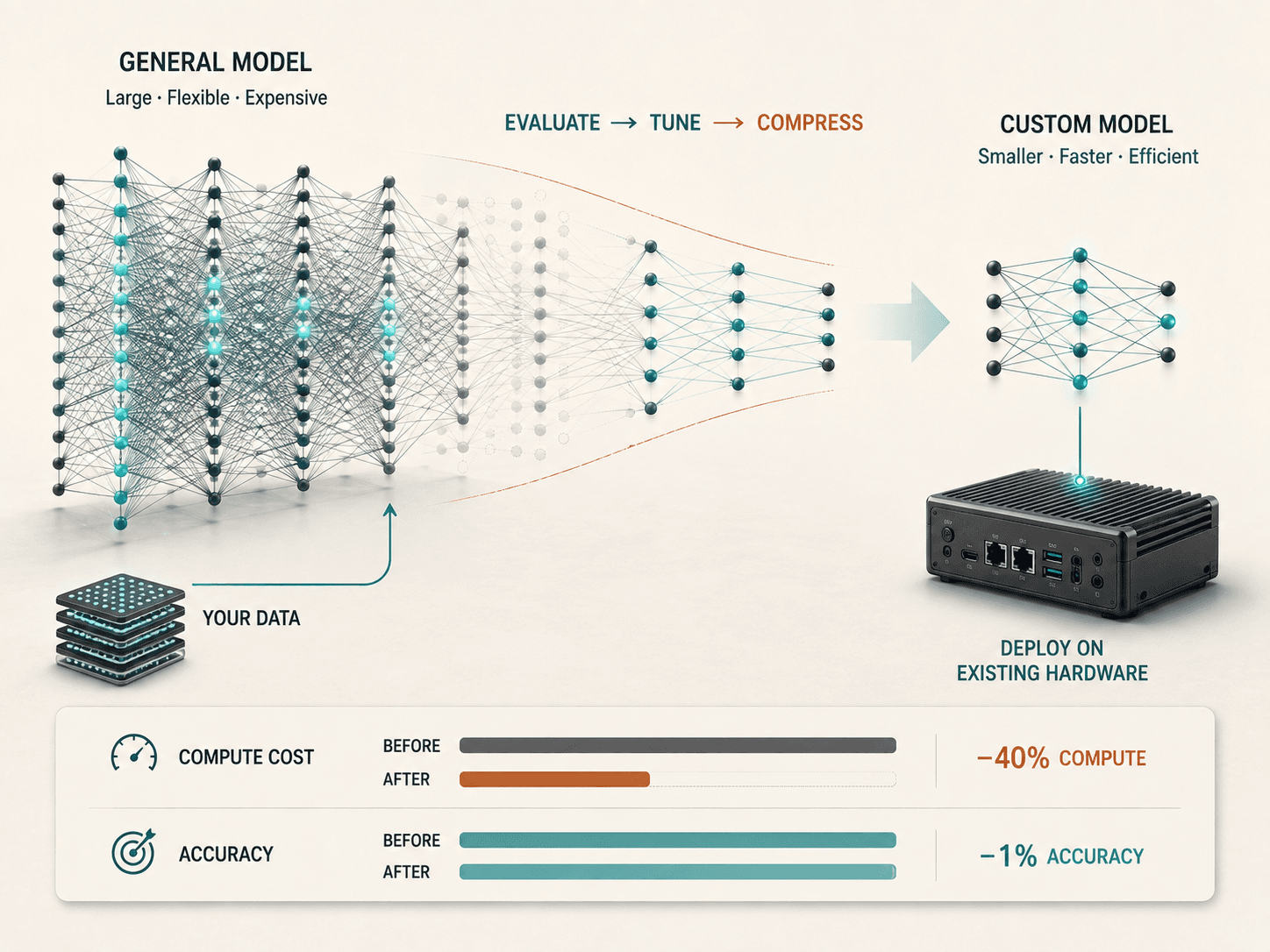
Models designed for your problem and compressed to run on the hardware you already have, down to an edge device sitting on the line.
General-purpose models are heavy, costly to run, and rarely shaped like your data. Paying per token for inference is not an answer that survives a plant-floor budget review.
A model sized to your constraints. Our published work cut computational cost by 40% for a 1% performance loss (ECAI 2024), and trained 94.7% faster than the state of the art (PAKDD 2023).
- Model compression and quantisation
- Edge and embedded inference
- Domain-specific architecture design
Every capability begins as a scoped pilot on your own data.
On your premises, at the edge, or in your cloud. Your data does not have to leave your network.
Access to a representative sample of your data, and one person who knows the process well.
Agreed success criteria before work starts, so the pilot has a clear pass or fail.
Monitoring, retraining and support, so the system keeps performing once we step back.